
China Trademark Gazette
Trademark Registration Service for Foreign Enterprises
Welcome
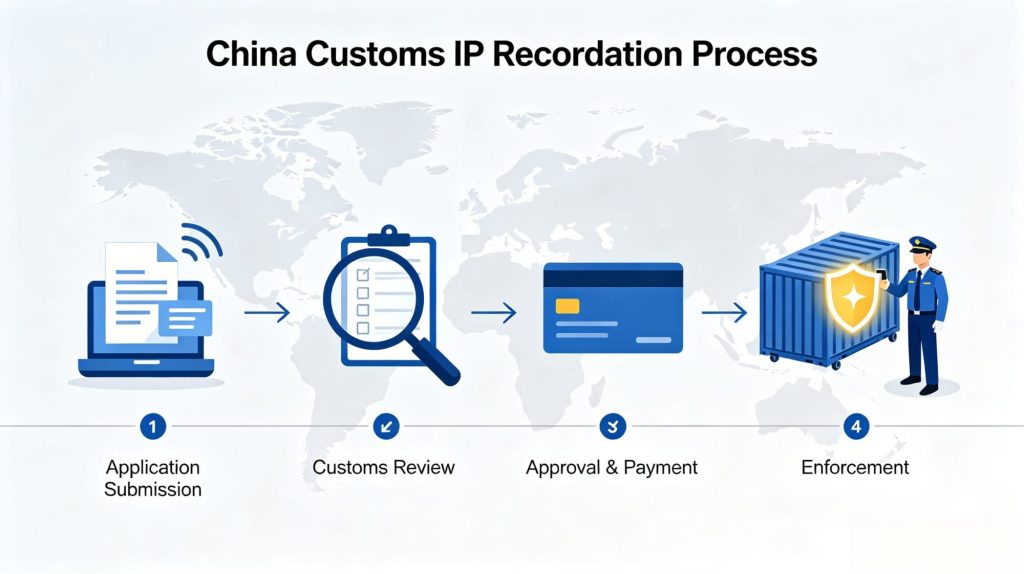
Guide to Customs Intellectual Property Recordation in China

Protecting intellectual property (IP) within China and for the Chinese market is not an optional extra—it is an urgent necessity, especially if your goods are manufactured in China.
Securing robust IP protection in China demands a strategic registration approach, particularly given the widespread prevalence of counterfeiting and the sophisticated, multi-layered Chinese IP legal framework. This guide breaks down the key procedures and critical benefits of recording your IP rights with Chinese Customs, enabling you to secure comprehensive legal safeguards for your intellectual assets.
It delivers clear, step-by-step instructions for recording trademarks and copyrights with China Customs. By following these comprehensive guidelines, you will not only safeguard your valuable IP portfolio but also bolster your corporate credibility and operational security across the Chinese market. These proactive measures create a robust line of defense against IP infringements targeting your products.
Recordation of Intellectual Property Rights with China Customs
1. The Significance of Trademark Registration in China
Above all else, the foundational step to enforcing trademark rights in China is registering your brand name and/or logo as a Chinese trademark.
That said, full-spectrum protection—especially against counterfeiting and illicit export of fake goods—requires an additional recordation filing with China Customs. This step is indispensable for any enterprise exporting merchandise from China.
2. Procedures for IP Recordation with China Customs
To record a registered Chinese trademark with China Customs, applicants must submit the following complete documentation:
- Registration Type (National Domestic / WIPO Madrid)You may hold either a direct Chinese domestic trademark registration or an international registration via the World Intellectual Property Organization (WIPO). For most businesses, filing a national trademark application directly in China is simpler and more efficient than navigating the more complex WIPO Madrid system, while also delivering fully enforceable protection before China Customs.
- Applicant Identity InformationFull legal entity name, registered business address, and full contact details (telephone number, fax number, official email address). This information enables Customs to reach you promptly regarding any product-related inquiries or suspected infringement cases.
- Enterprise Qualification DocumentsBusiness license or certificate of incorporation / certificate of good standing, accompanied by certified Chinese translations. These papers serve as legal proof of your company’s legitimate business status.
- Power of AttorneyA duly signed authorization document granting your designated representative authority to submit all legal filing paperwork on behalf of the IP right holder.
- Trademark SpecificsChinese trademark registration number, designated Nice classification classes, list of covered goods, and the valid term of trademark protection.
- Visual Materials & Product InventoryClear photographs of the trademark logo and all covered products to strengthen enforcement scope. A maximum of 30 goods items may be designated per trademark for targeted Customs inspection.
3.China Customs Review & Approval Process
After full submission of your recordation application, China Customs generally issues an approval or rejection decision within 30 working days. Once approved, a nominal administrative fee is payable per recordation entry. Each successful recordation grants ten years of Customs enforcement protection, renewable for successive ten-year terms indefinitely.
4. Fees Associated with Customs IP Recordation
Total costs for recording IP rights with China Customs vary based on multiple factors: the type of underlying trademark/copyright registration, the quantity of IP works or marks being filed, and any supplementary administrative services requested. Businesses should allocate dedicated budget for these fees as an integral component of their overall China IP protection strategy.
5. Building a Holistic IP Protection Regime
Combined recordation of copyrights alongside trademarks forms a core pillar of a complete China IP protection strategy. We strongly recommend including both categories within your Customs recordation portfolio to maximize enforcement coverage.
6. Potential Risks of Unrecorded Intellectual Property
Failing to register your IP rights with China Customs exposes your business to severe commercial and legal risks. Counterfeiters can exploit unrecorded IP assets to tarnish your brand reputation, erode sales revenue, and trigger costly cross-border legal disputes. Most critically, without Customs recordation, you lose access to rapid administrative enforcement channels and cannot prompt Customs authorities to intercept counterfeiters and infringing goods at border points.
7. Core Advantages of Recording Trademarks with China Customs
- Enhanced Surveillance & ProtectionCustoms officers actively monitor shipments and seize infringing products, drastically reducing the volume of counterfeit goods entering domestic and export supply chains.
- Immediate Administrative ActionUpon detection of counterfeit shipments, Customs may promptly detain the goods and block their circulation in domestic or overseas markets.
- Nationwide Enforcement ReachProtection applies across all Customs ports and jurisdictions throughout China, delivering consistent border enforcement nationwide.
8. The Ongoing Imperative of IP Monitoring & Enforcement
Completing Customs recordation is not the end of IP protection work; continuous monitoring and active enforcement remain essential to preserving your rights. This involves regular reviews of your Customs recordation files, tracking updates to relevant IP and Customs regulations, and swift response to any identified counterfeiting or infringement incidents. Partnering with a reputable IP protection service provider delivers robust support for long-term surveillance and enforcement initiatives, and your local Chinese IP attorney can connect you with trusted industry specialists.
9. Step-by-Step Application Workflow for Customs IP Recordation
- Compile and submit all mandatory supporting documents to the General Administration of Customs of China for official acceptance, including ownership certificates and full particulars of all licensed IP users.
- Following acceptance, Customs conducts a comprehensive formal and substantive review of your entire application dossier.
- Upon successful review clearance, your trademark Customs recordation takes full legal effect.
10. Typical Timeline for Trademark Recordation
The full process from initial application submission to final official Customs approval normally spans 2 to 3 months. Exact turnaround time depends on the complexity of your filing and the volume of supporting documentation submitted.
Navigating Challenges & Ensuring Full Compliance
1.Resolving Common Application Hurdles
The most frequent obstacles to smooth processing include incomplete document sets and inconsistent information across legal filings or travel records. Applicants must ensure every submitted document is fully accurate and complete to avoid unnecessary processing delays.
Applicants are also required to demonstrate good standing—a legal standard that involves a comprehensive assessment of the applicant’s operational track record and conduct to confirm full compliance with Chinese laws and responsible fulfillment of all financial and regulatory obligations.
2. Mitigating Processing Delays
Background vetting procedures and extensive cross-border travel history can complicate application assessment. To streamline review, submit complete travel records well in advance and resolve all outstanding legal or administrative matters prior to filing.
3. Addressing Application Rejections
Should your recordation application be rejected, the General Administration of Customs will issue a formal written notice detailing the specific grounds for refusal. Common rejection causes include failure to meet residency criteria or insufficient documentation proving good legal standing. Applicants may either file an appeal after rectifying all cited deficiencies or submit a revised new application.
Conclusion
By following and implementing the detailed procedures outlined above, you can drastically strengthen your intellectual property protection posture within China. While the Customs recordation process carries inherent complexity, the long-term commercial security and competitive market advantages it delivers are invaluable.
If navigating these formalities proves overwhelming, our seasoned team of China IP specialists offers full end-to-end support throughout the entire recordation lifecycle. Contact us today to fortify your IP assets and confidently navigate the intricacies of China’s Customs intellectual property regime.

Aiutiamo a risolvere i tuoi problemi legali
Forniamo soluzioni legali per vari casi in oltre 40 lingue e siamo specializzati nel fornire un servizio legale professionale, efficace e multilingue.
 IT
IT  EN
EN  ZH
ZH  ES
ES  AR
AR  FR
FR  DE
DE  NL
NL  JA
JA  KO
KO  PT
PT  PL
PL